
Writing a great blog is only half the job. If your content isn’t optimized for search engines, it may never reach the audience you intended. That’s where on-page SEO comes in.
On-page SEO refers to the optimization techniques you apply directly to your web pages to improve their visibility in search engine results. From choosing the right keywords to optimizing images and internal links, every detail plays a role in helping your content rank higher.
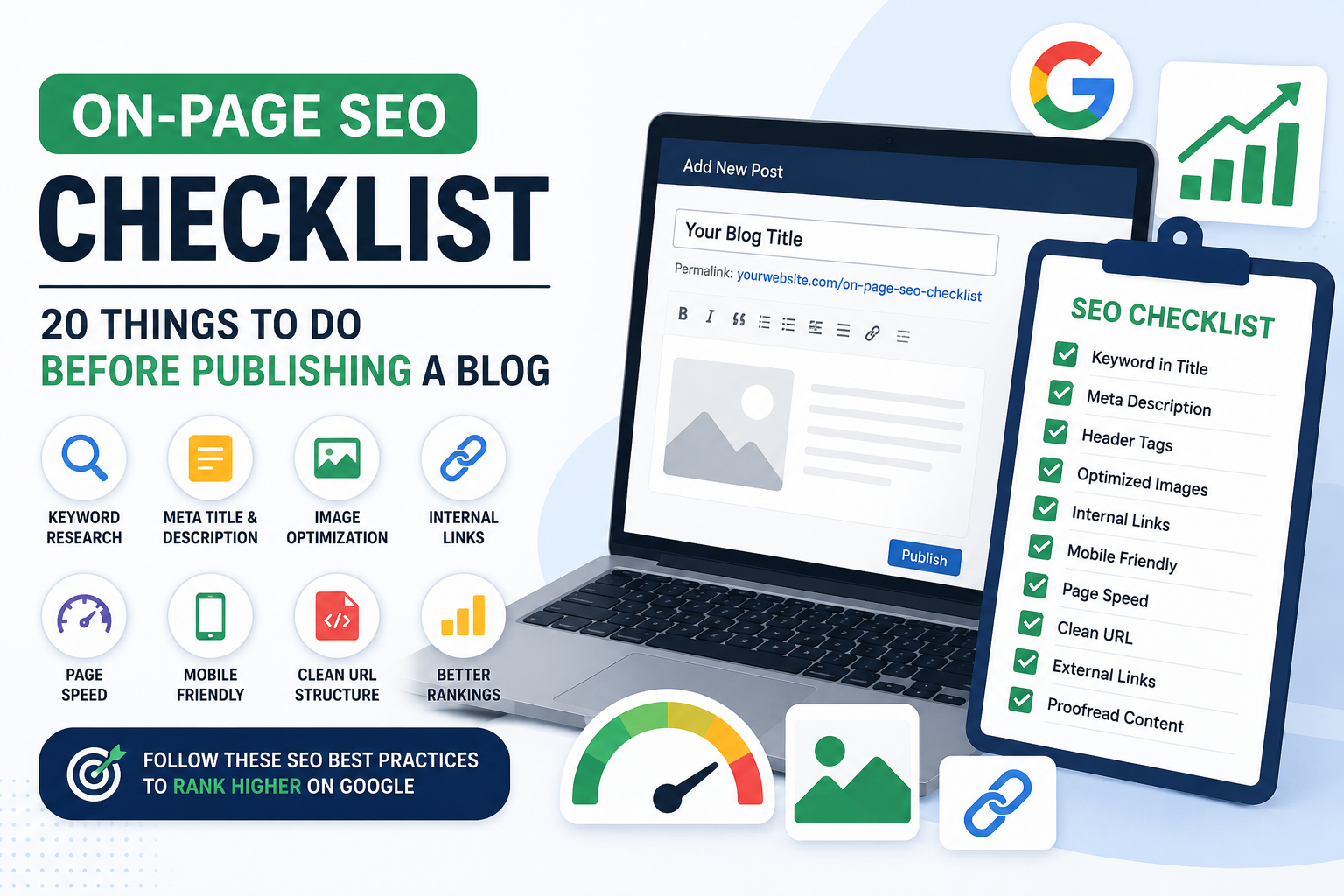
Before you hit the Publish button, go through this 20-point checklist to make sure your blog is fully optimized.
1. Choose a Primary Keyword
Every blog should focus on one main keyword that matches what your audience is searching for.
2. Add the Keyword to the Title
Include your primary keyword naturally in the blog title.
3. Write an SEO-Friendly URL
Keep your URL short, descriptive, and include your primary keyword.
Example:
yourwebsite.com/on-page-seo-checklist
4. Write an Engaging Meta Title
Keep it between 50–60 characters and make it compelling enough to encourage clicks.
5. Optimize the Meta Description
Write a clear summary of your blog in 150–160 characters while naturally including your primary keyword.
6. Use Only One H1 Heading
Your blog should have only one H1 tag, usually the main title.
7. Organize Content with H2 and H3 Headings
Break long sections into smaller headings to improve readability and help search engines understand your content.
8. Place Your Keyword Naturally
Mention your primary keyword in:
- The introduction
- One or two headings
- Throughout the content
- The conclusion
Avoid keyword stuffing.
9. Improve Readability
Write short paragraphs, simple sentences, and use bullet points where appropriate.
10. Add Internal Links
Link to related blogs or service pages on your website.
11. Include External Links
Link to trustworthy websites when supporting facts or statistics.
12. Optimize Images
Compress large images before uploading to improve loading speed.
13. Add Alt Text to Images
Describe each image using meaningful alt text.
14. Use Descriptive Image File Names
Instead of:
IMG12345.jpg
Use:
on-page-seo-checklist.jpg
15. Check Mobile Friendliness
Ensure your blog looks great on phones and tablets.
16. Improve Page Speed
A fast-loading page improves user experience and supports SEO performance.
17. Add a Call-to-Action
Encourage readers to contact you, read another blog, or explore your services.
18. Proofread Your Content
Fix spelling and grammar mistakes before publishing.
19. Preview Your Blog
Check formatting, spacing, images, and links before making your article live.
20. Submit the Page to Google
Once published, request indexing through Google Search Console so Google can discover your content faster.
Final Thoughts
On-page SEO isn’t about trying to outsmart search engines—it’s about creating content that’s clear, well-structured, and genuinely useful for readers. Following this checklist before publishing every blog can improve your chances of ranking higher, attracting more organic traffic, and providing a better user experience.
SEO is all about consistency. Small improvements made with every blog can lead to significant results over time. As a Freelance Digital Marketer in Kerala, I help businesses optimize their websites with practical, results-focused SEO strategies that support long-term online growth.